Baghdad falls to the Mongol army
Mongol forces led by Hülegü captured Baghdad, bringing Abbasid rule in the city to an end. The siege and its aftermath caused immense destruction and loss of life.
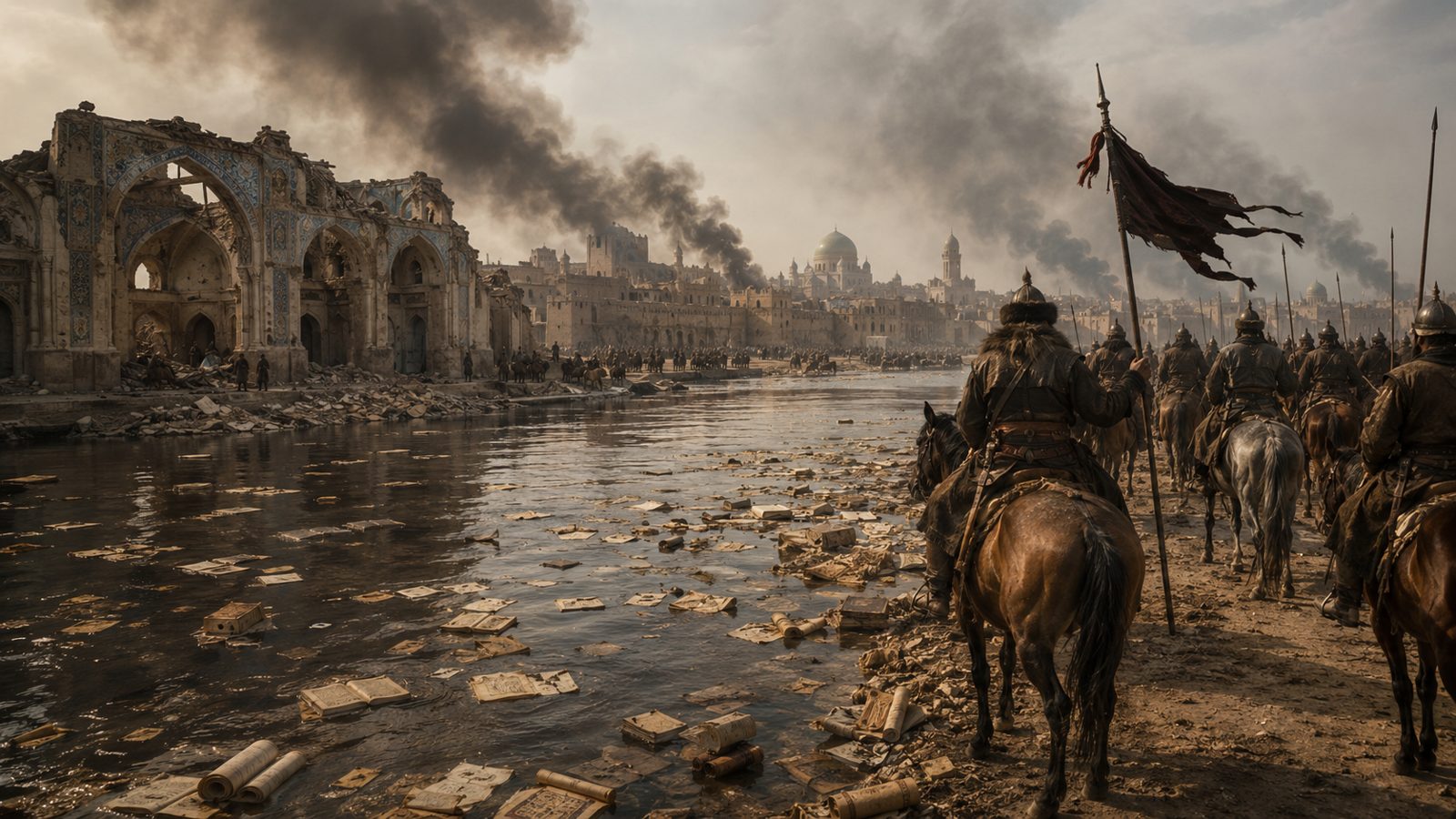
This article retells a historical event in a newspaper format. It is not a current news report. The image is an illustrative reconstruction; disputed details are identified in the text.
Contemporary and later accounts give widely varying casualty figures. They bear witness to the disaster's scale but should not be treated as a precise census. Political institutions, urban life and networks of learning were all affected.
The famous image of the Tigris turning black with ink from discarded books belongs to the literary memory of the catastrophe. The loss of manuscripts and institutions was real, while the most vivid details require caution.
Baghdad's fall changed the region's political map and disrupted scholarly communities. It should not be described as the end of intellectual life across the Islamic world. Knowledge, people and institutions continued in other places and in new forms.