The Rosetta Stone did not speak by itself
Three scripts beside one another make decipherment look straightforward. The Rosetta Stone offered a remarkable comparison, but researchers still had to understand how signs worked. A sign might represent a sound as well as an idea.
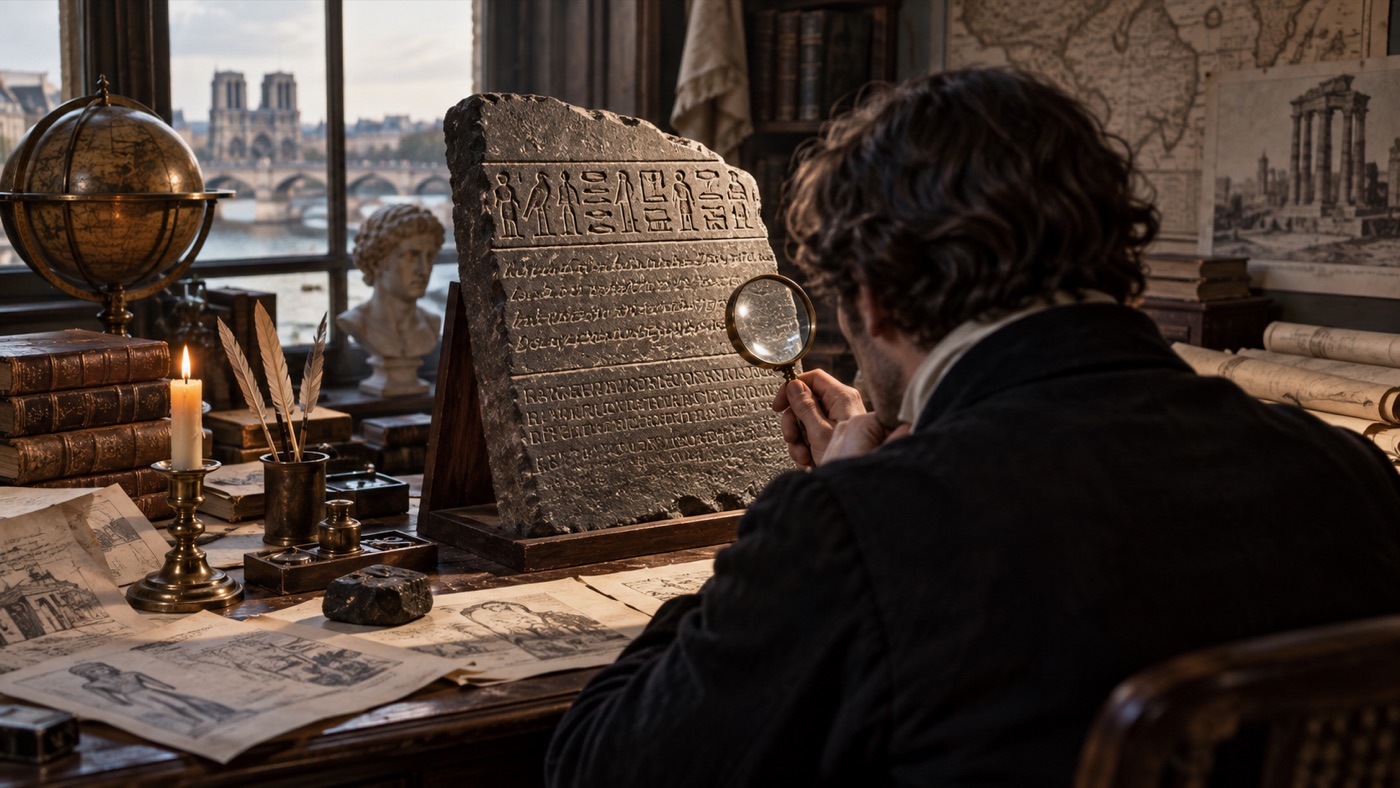
The named writer is a fictional editorial persona. This is historical commentary, not eyewitness testimony or a statement by a real person. The illustration is AI-generated.
Young's work on royal names and Champollion's use of Coptic belong in the same history. The 1822 breakthrough did not answer every question. Showing that a method works is different from completing its task.
The hero here is also a method: comparing languages, testing an interpretation against another name and retaining useful parts of earlier work. A sudden flash of genius is a poor description of the long labour involved.
The greatest gain came afterwards. Egypt could increasingly be studied through its own written records, not only through outsiders. The stone spoke because researchers listened carefully and tested one another's findings.
Sources & further reading
Source links retained from the original editorial dossier. Dialogue and commentary are not quotations from these sources.