King John accepts Magna Carta at Runnymede
King John and the rebel barons reached an agreement beside the Thames. Magna Carta set down demands concerning royal power, justice and the barons' protections.
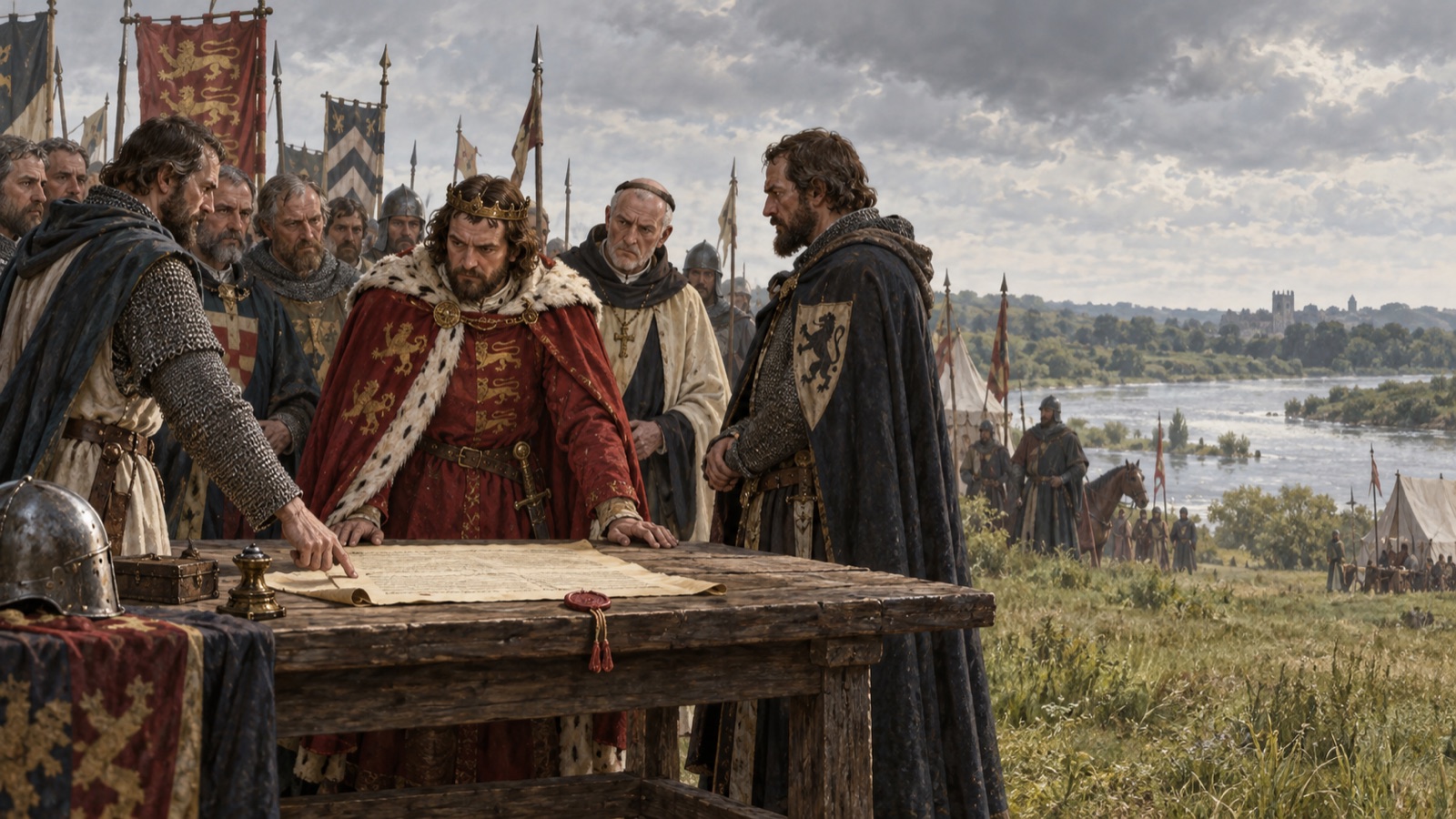
This article retells a historical event in a newspaper format. It is not a current news report. The image is an illustrative reconstruction; disputed details are identified in the text.
The agreement emerged from armed confrontation. Territorial losses in France, taxation and resentment of the king's government helped drive the rebellion. Its immediate purpose was to secure concessions for the barons, rather than equal rights for everyone.
The charter's later importance went beyond its original political setting. The principle that rulers, too, were bound by law became central to its legacy. Reading universal modern liberties into the first version, however, obscures the inequalities of medieval society.
The settlement soon collapsed. Pope Innocent III annulled it in August 1215 and civil war resumed. Revised versions issued in later years allowed the text to survive, acquiring meanings its original negotiators could scarcely have anticipated.
Sources & further reading
Source links retained from the original editorial dossier. Dialogue and commentary are not quotations from these sources.