Vesuvius erupts: Pompeii buried beneath ash
Vesuvius erupted violently, sending ash, pumice and gases across the Bay of Naples. Pompeii and neighbouring settlements were overwhelmed in a disaster preserved in both archaeological remains and written testimony.
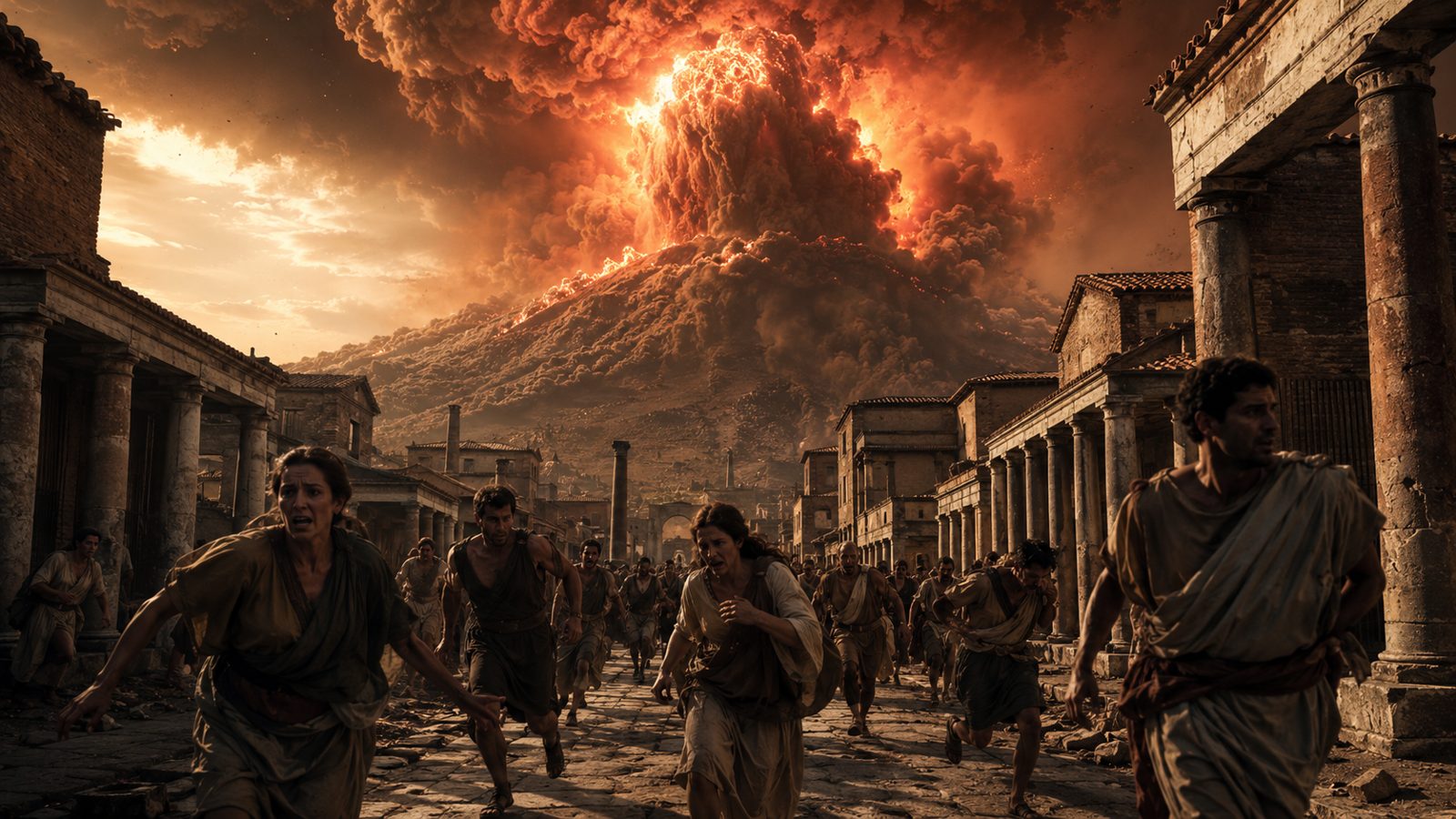
This article retells a historical event in a newspaper format. It is not a current news report. The image is an illustrative reconstruction; disputed details are identified in the text.
Falling pumice and ash were followed by destructive flows of hot gas and volcanic material. Some inhabitants escaped during the earlier stages; others were trapped as conditions changed. Herculaneum also suffered catastrophic destruction.
Pliny the Elder crossed the bay during a rescue effort and died. His nephew, Pliny the Younger, later described the eruption in letters. These accounts are invaluable, but they do not supply a complete view of every settlement or victim.
The buried streets, buildings and everyday objects offer an unusually detailed record of Roman life. The familiar August date is debated, so this adaptation identifies the event by its secure year rather than presenting a disputed day as certain. Preservation should never obscure the human cost.