Manzikert was a long road, not a single doorway
The capture of a Byzantine emperor in 1071 was a remarkable military and political rupture. Anatolia did not, however, become an entirely different country the following morning. People, movement and settlement gave the battle its longer consequences.
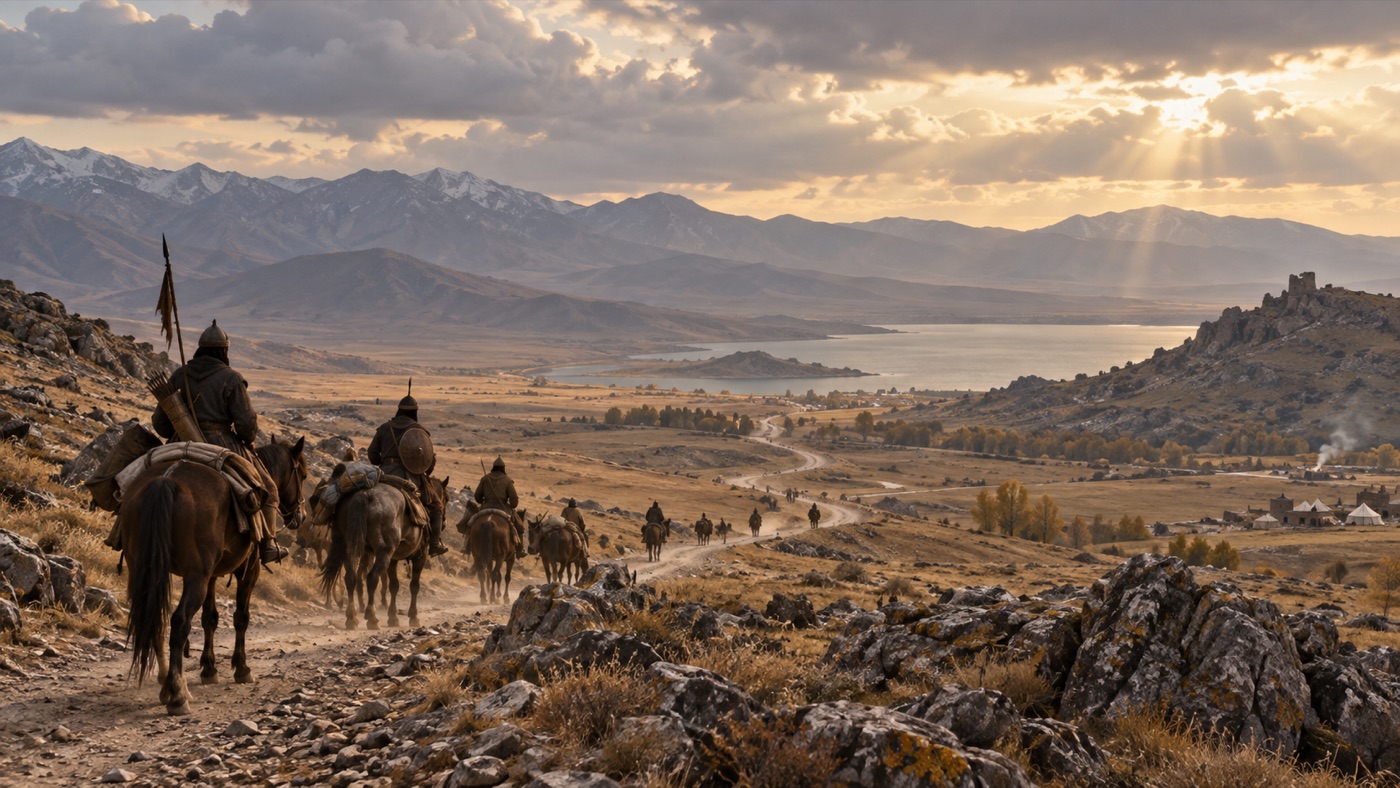
The named writer is a fictional editorial persona. This is historical commentary, not eyewitness testimony or a statement by a real person. The illustration is AI-generated.
An arrow of conquest conceals tents, herds, trade, taxation and local alliances. Byzantine authority varied by region, while the Seljuk world was not a single uniform centre. The victory created opportunities within that complex landscape.
Accounts differ about the encounter between Alp Arslan and the captive Romanos. The emperor's capture was already momentous; extra miracles are unnecessary. It opened the way to negotiations and renewed struggles for power.
Taking 1071 seriously means following the uneven processes that came afterwards. Villages, markets, languages and neighbourhoods explain historical transformation alongside the battlefield. The roads beyond the victory deserve our attention too.