Pompeii's last ordinary day
Before the eruption, someone opened a bakery, wrote on a wall or planned an evening meal. Pompeii's distinction lies not only in the enormous cloud over Vesuvius, but in the traces of ordinary rhythms beneath it.
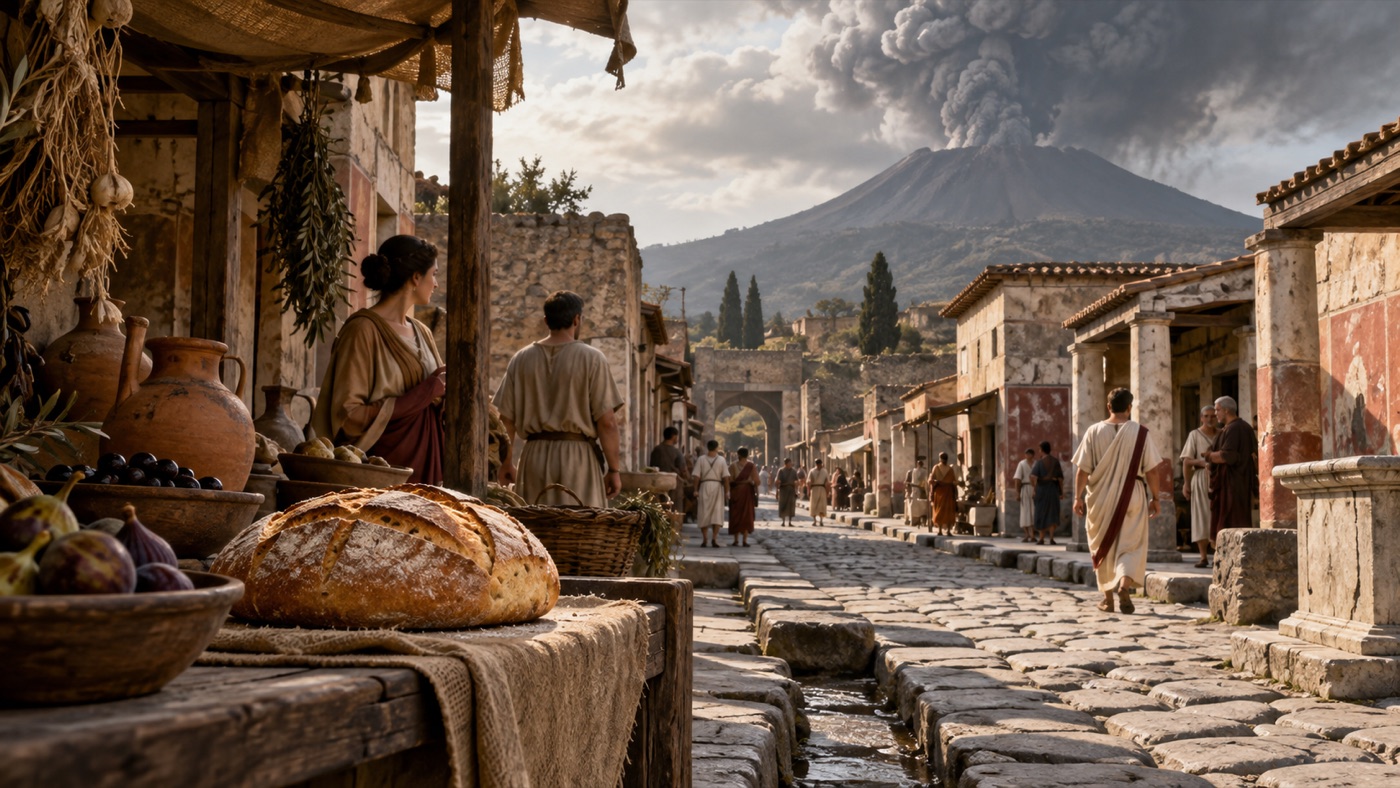
The named writer is a fictional editorial persona. This is historical commentary, not eyewitness testimony or a statement by a real person. The illustration is AI-generated.
Its inhabitants did not all experience the same sequence. Some escaped during the falling ash and pumice; later hot flows proved fatal to those who remained. One frozen cinematic instant erases hours of uncertainty and decision.
Bread, shop counters and the arrangement of rooms reveal things monuments cannot. Describing a city frozen in time can also romanticise the disaster. Behind a preserved object may be a person who never returned home.
The precise day of the eruption remains debated. Knowing the year does not mean knowing every detail. Pompeii is a fragile city as well as a source of knowledge: a place where an ordinary day could no longer be completed.