Greek fire: the Byzantine weapon that burned on water
Byzantine naval warfare was transformed by an incendiary weapon remembered as Greek fire. Accounts describe flames projected towards enemy vessels and burning on the water's surface.
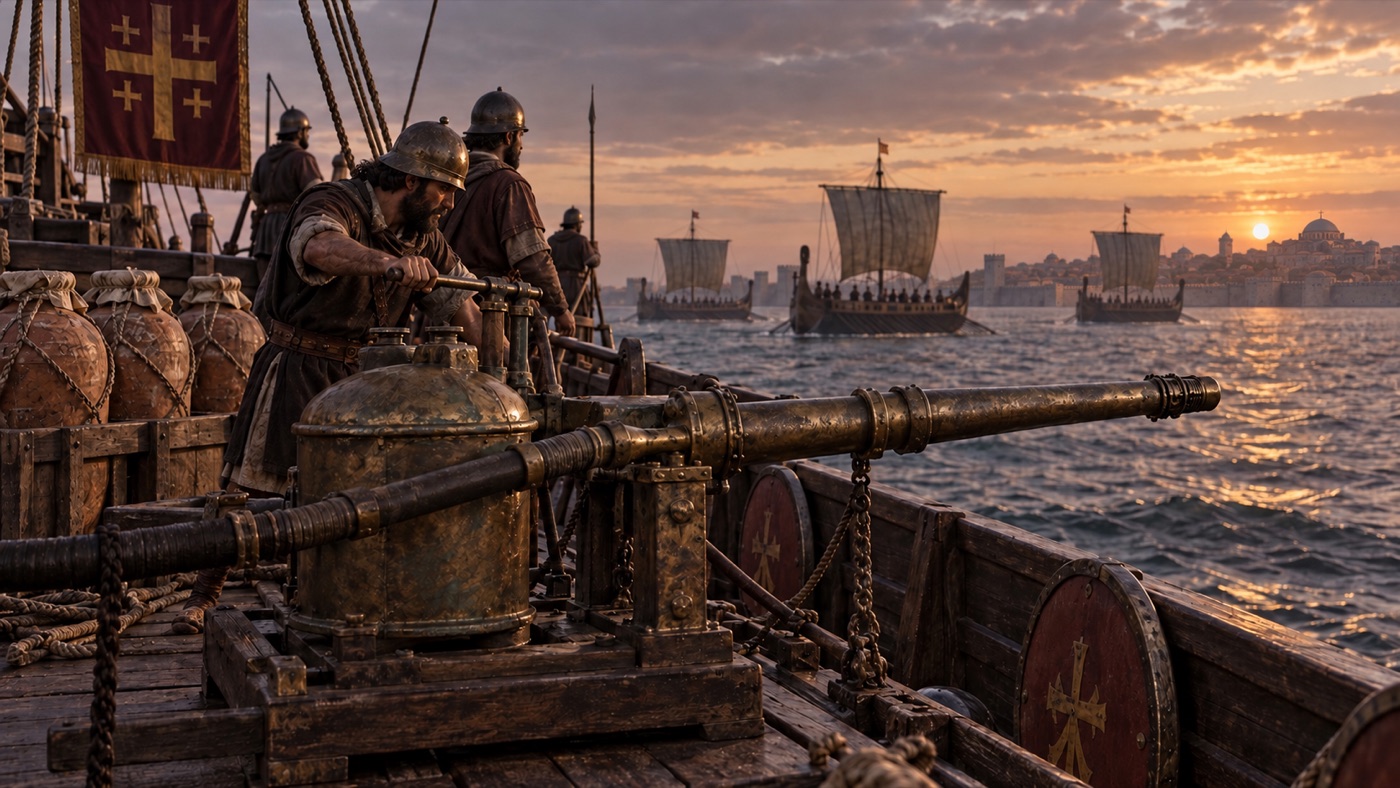
This article retells a historical event in a newspaper format. It is not a current news report. The image is an illustrative reconstruction; disputed details are identified in the text.
Its precise composition remains uncertain. Petroleum-based ingredients, resins and other substances have been proposed, but no surviving recipe settles the question. A modern reconstruction should therefore be described as a hypothesis.
The weapon also depended on delivery equipment, ships and trained crews. Keeping a formula secret was only one element of maintaining military advantage. Handling, pressure and deployment were part of the wider technological system.
Greek fire became closely associated with the defence of Constantinople. Its reputation sometimes makes it appear like a single miraculous invention. The historical problem is richer: how did an empire organise and protect the skills needed to use such a weapon?