Ibn Sina: recording knowledge, observing the patient
An imagined conversation about the Canon of Medicine and the relationship between a written text and bedside observation.
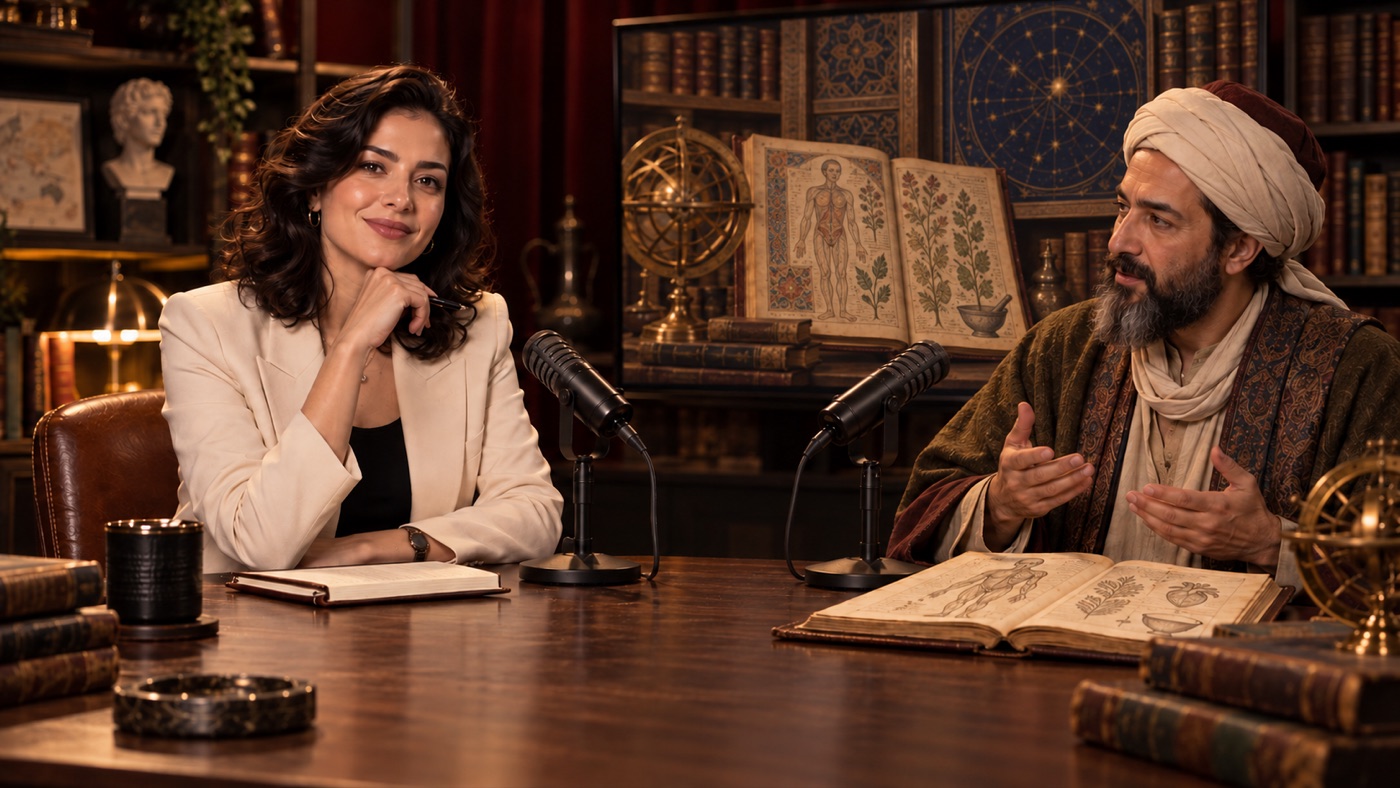
These are fictional dramatisations, not real interviews or authentic quotations. Host Defne Arman is a fictional character, unrelated to real individuals. First-person answers are imagined from the cited historical material. Images are AI-generated. No audio or video recording is available.
Defne Arman asks; Ibn Sina answers in an imagined dialogue.
Why can a medical book survive for centuries?
Ibn Sina · fictional answerOrganising knowledge allows successive generations to debate, transmit and change it. The Canon's strength lay in how it classified questions as well as in its answers. Later physicians did not have to repeat it unchanged.
What if the text conflicts with what you observe at the bedside?
Ibn Sina · fictional answerA page should not take precedence over a living body. Observation tests knowledge, while a text provides a language for comparing observations. The tension between them is part of learning.
How would you view your work being read in Europe?
Ibn Sina · fictional answerKnowledge does not remain within a single civilisation. Translations and universities brought the questions of different ages together. Centuries of use do not mean that every judgment in a book remains correct today.
What would you tell a researcher today?
Ibn Sina · fictional answerTreat authority as a starting point, not an endpoint. Ask which observation supports each conclusion. Record uncertainty instead of concealing it.
Sources & further reading
Source links retained from the original editorial dossier. Dialogue and commentary are not quotations from these sources.