Alexander the Great dies at 32
Alexander died in Babylon after a prolonged illness, leaving an empire stretching from the eastern Mediterranean towards India. His death created an immediate crisis of succession.
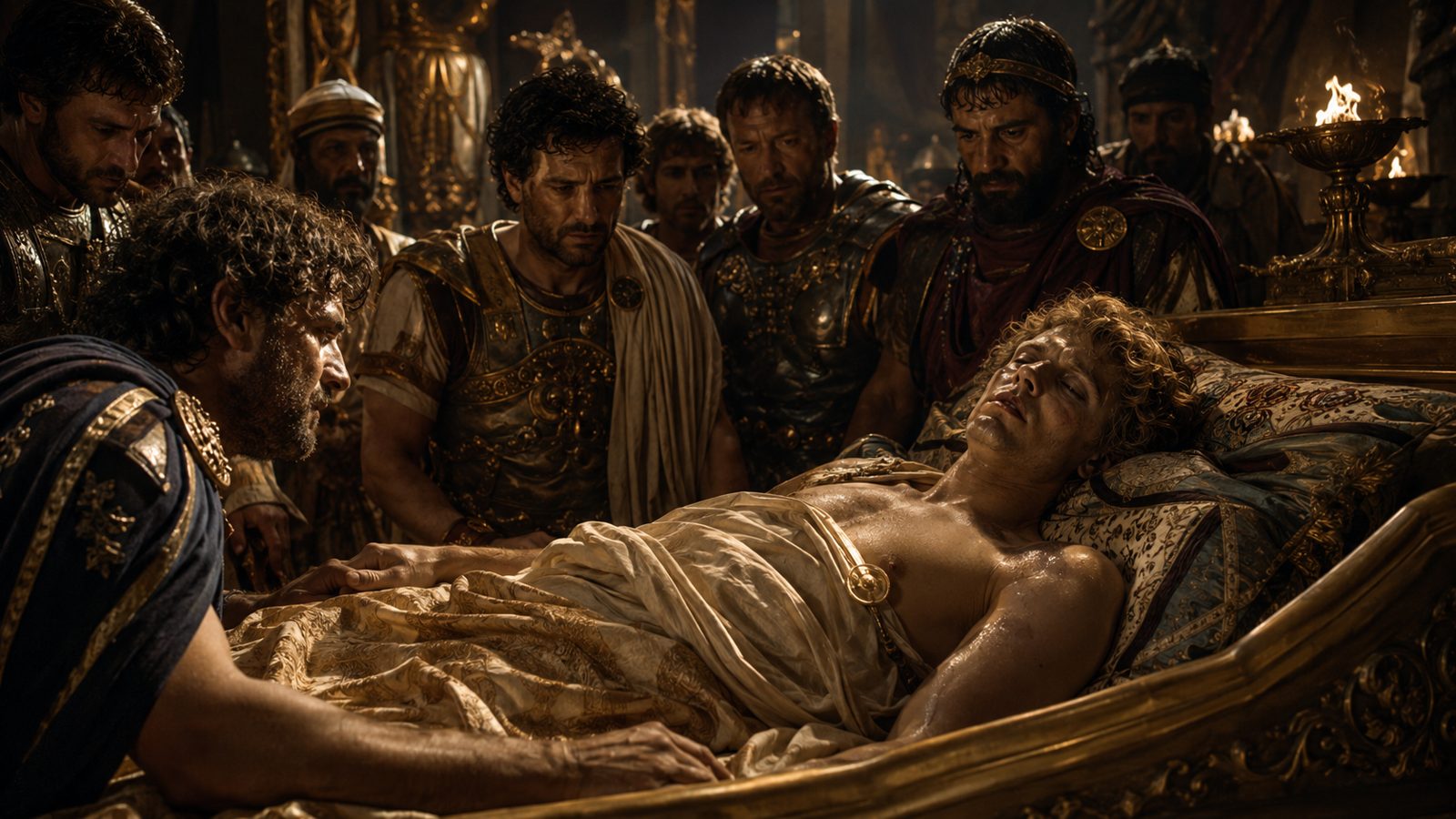
This article retells a historical event in a newspaper format. It is not a current news report. The image is an illustrative reconstruction; disputed details are identified in the text.
The cause remains uncertain. Ancient descriptions of fever and declining strength have encouraged explanations ranging from disease to poisoning. None should be presented as a diagnosis established from modern clinical evidence.
Accounts of his last words and the unusual condition of his body belong to the contested narrative of his death. The often-repeated reply that the kingdom should go to the strongest is not an uncontested transcript of a final conversation.
Without an effective, undisputed succession, Alexander's commanders competed for control. The wars of the Successors divided the empire. Questions about who would rule, and even who would possess the king's remains, became part of the struggle over his legacy.