What Baghdad lost was the structure of tomorrow
The story of the Tigris turning black with ink is an image of destruction, not a verified measurement. When I think about Baghdad in 1258, I picture a bookbinder's bench. Knowledge lives in people and practices as well as shelves.
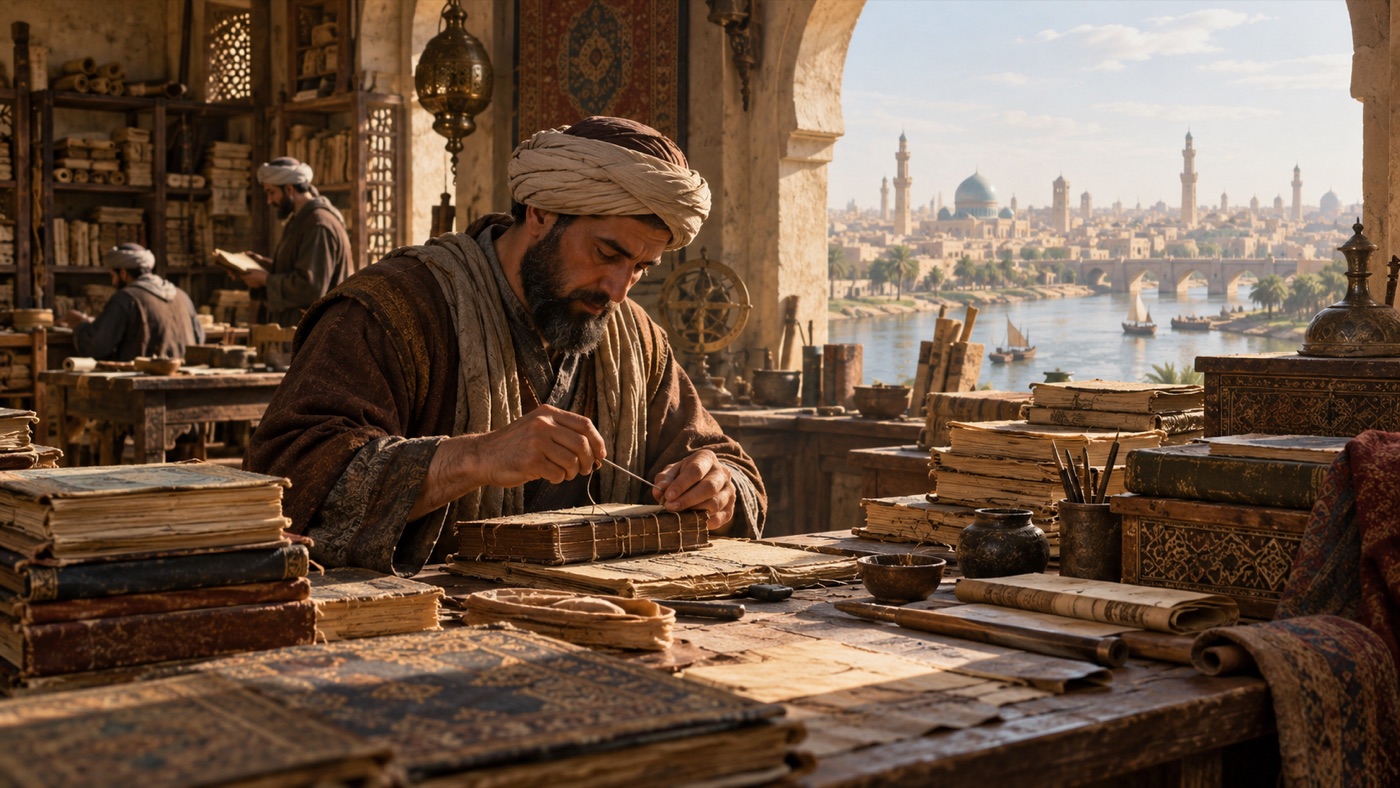
The named writer is a fictional editorial persona. This is historical commentary, not eyewitness testimony or a statement by a real person. The illustration is AI-generated.
The violence ended Abbasid political rule in the city and damaged administrative, commercial and intellectual networks. Exact losses are difficult to establish. A closed workshop also means broken apprenticeships, wages, neighbourhood ties and opportunities to pass on skills.
A manuscript can travel, but it needs readers, schools and copyists to remain in circulation. Rather than saying knowledge ended in a night, we should ask how the conditions that sustained it were shattered.
Baghdad continued to exist after the catastrophe. That does not diminish its suffering. Sometimes a city's wound is most visible in the shop that fails to open the following morning.