Carthage's unsalted soil
The most familiar image of Carthage's destruction is Romans scattering salt over the ground. Ancient evidence does not securely support that scene. The violence of 146 BCE needs no later legend to make it terrible.
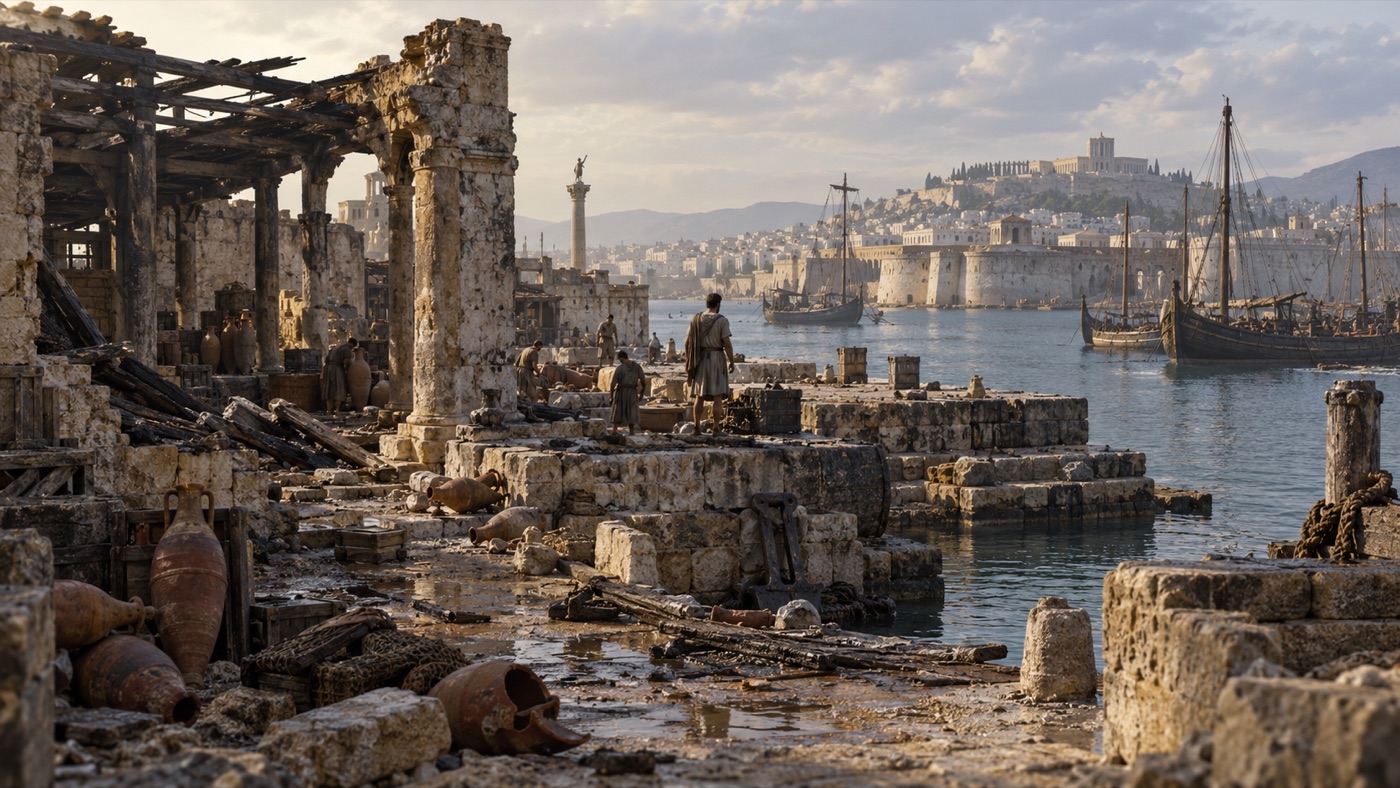
The named writer is a fictional editorial persona. This is historical commentary, not eyewitness testimony or a statement by a real person. The illustration is AI-generated.
Carthage was a port with warehouses, ships, workshops and Mediterranean trading relationships. Rome destroyed an economic network as well as its rival's walls. The coloured territory on a map contained working people's knowledge and labour.
The salt story offers a satisfying finality: nothing could ever grow there again. History does not close so neatly. Later Roman settlement and reuse show that the place continued to change after the catastrophe.
Both truths matter: the destruction was devastating, and the landscape did not die forever. Harbour structures and layers of reuse discipline a dramatic metaphor. Remembering Carthage means looking towards its connections with the sea, not imaginary salt.
Sources & further reading
Source links retained from the original editorial dossier. Dialogue and commentary are not quotations from these sources.