What Magna Carta did not say
A familiar origin story makes freedom appear the moment a king accepts a parchment. Runnymede in 1215 was more complicated. The agreement answered a crisis between John and rebellious barons, rather than proposing equal rights for all.
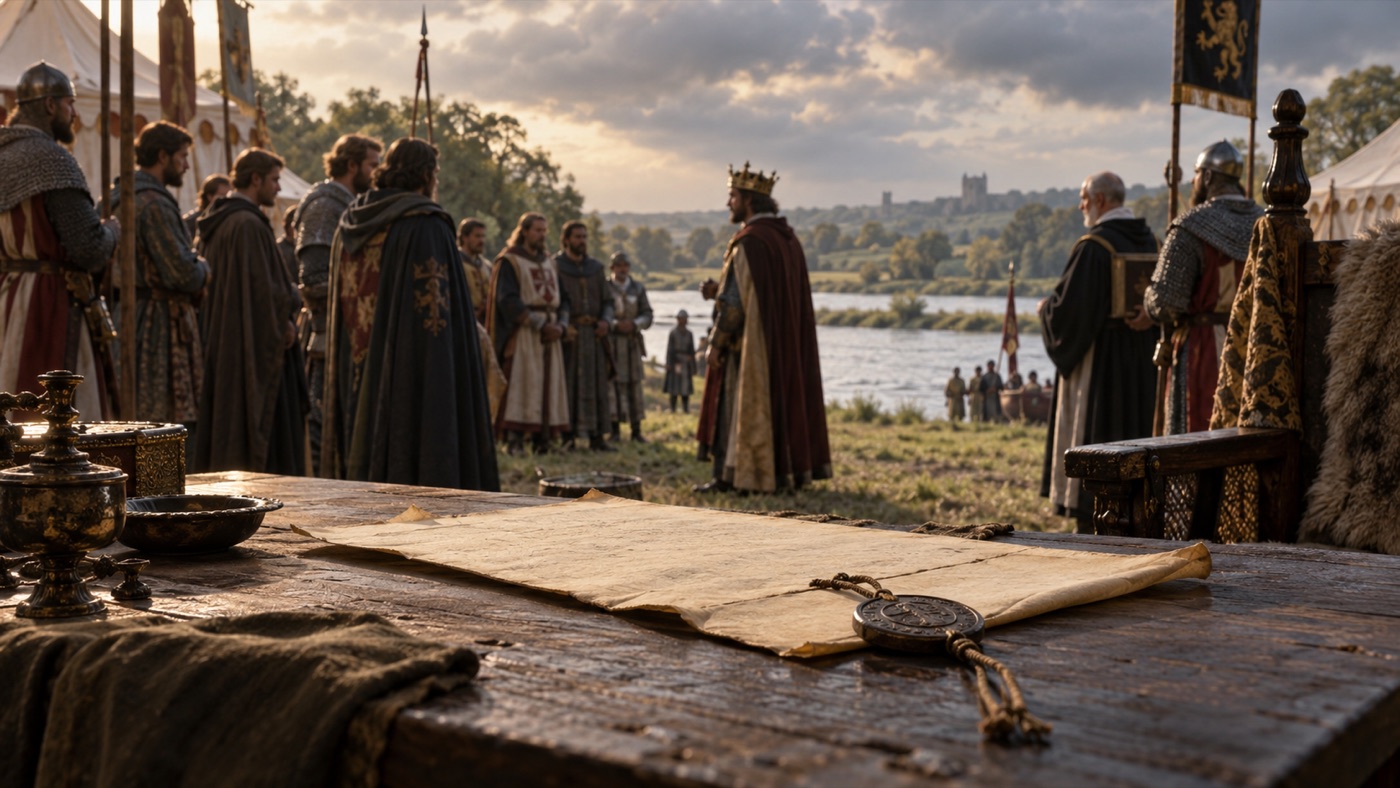
The named writer is a fictional editorial persona. This is historical commentary, not eyewitness testimony or a statement by a real person. The illustration is AI-generated.
That does not erase its importance. Limits on royal authority and written procedural guarantees left a powerful legacy. But a document's later uses are not identical to the aims of its first negotiators.
The initial settlement failed. Pope Innocent III annulled the charter, and civil war resumed. Later versions gave it renewed life and a broader political meaning. Distinguishing the first text from its afterlife reveals the movement of the story.
Magna Carta is not unimportant; it is burdened with the wrong miracle. It carried the inequalities of its time and later supported arguments about the rule of law. We can acknowledge both without losing our interest in it.
Sources & further reading
Source links retained from the original editorial dossier. Dialogue and commentary are not quotations from these sources.