Vasa: the weight of display
Carvings, tall sides and rows of guns made Vasa a floating expression of royal power. Then comes the basic question: could it stay afloat? The sinking of 1628 makes the consequences of design decisions unusually visible.
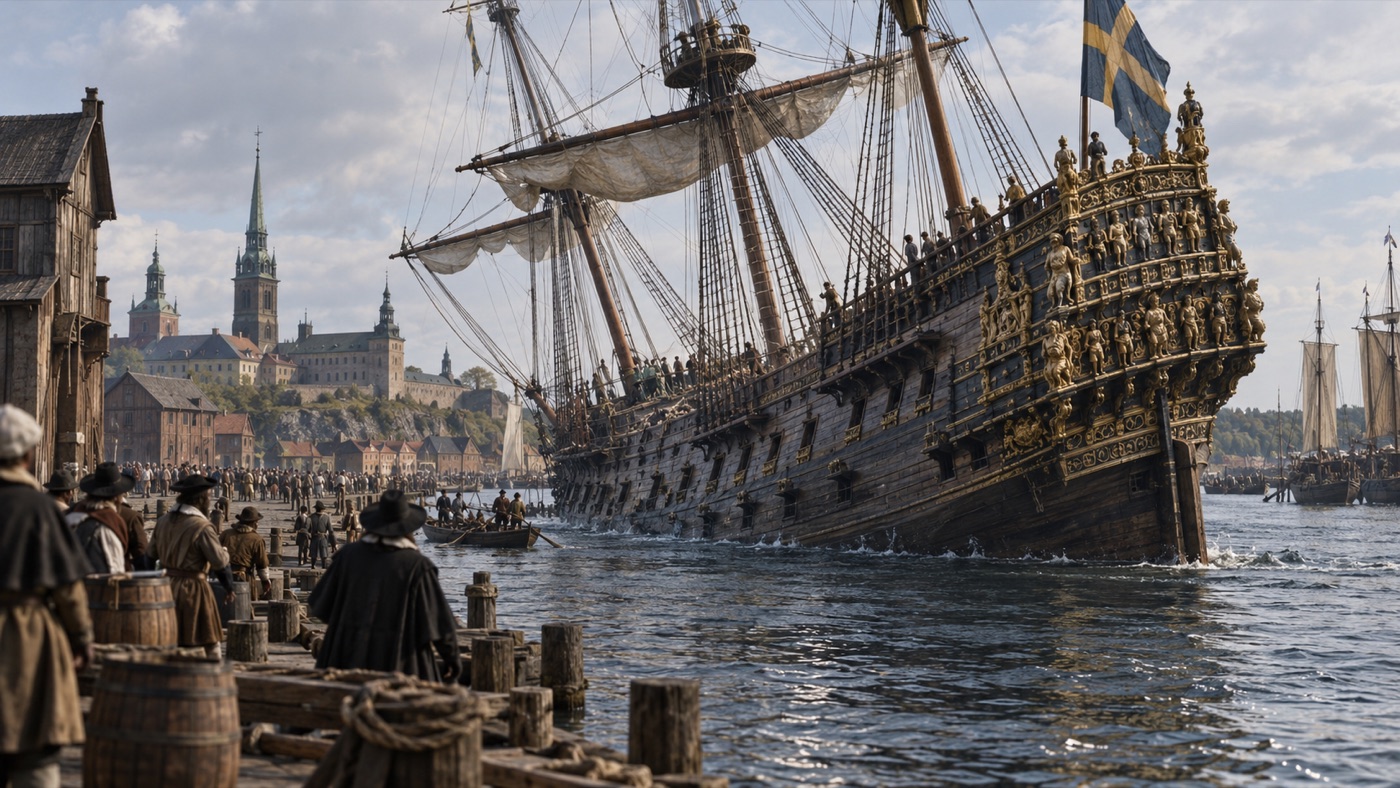
The named writer is a fictional editorial persona. This is historical commentary, not eyewitness testimony or a statement by a real person. The illustration is AI-generated.
The ship's instability exposed a conflict between impressive upper works and physical limits. Blaming one person oversimplifies a large project shaped by hierarchy and many individually reasonable demands.
Preservation and recovery now allow us to examine both its structure and everyday objects. For a sailor, this royal display was also a cramped workplace. The spectacular and practical sides occupy the same wood.
Vasa represents ambitious craft and substantial labour as well as failure. Its warning is simple: looking impressive does not prove fitness for purpose. Confusing those two measures can be costly in any century.
Sources & further reading
Source links retained from the original editorial dossier. Dialogue and commentary are not quotations from these sources.