“Who killed Alexander?” may be the wrong question
Alexander died in Babylon at 32, leaving an immense realm and conflicting accounts of his final illness. Instead of beginning with a culprit, consider why such a large political order depended so heavily on one person's health.
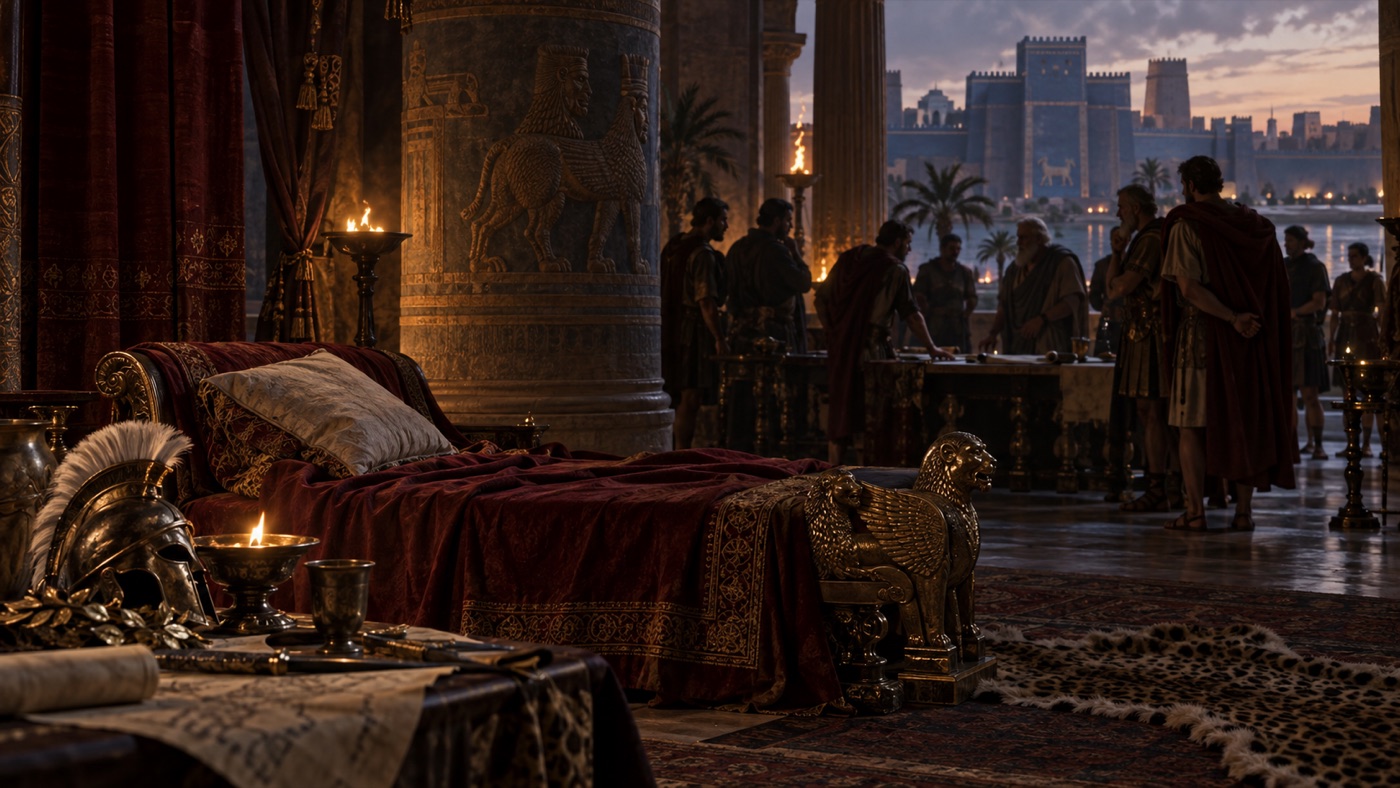
The named writer is a fictional editorial persona. This is historical commentary, not eyewitness testimony or a statement by a real person. The illustration is AI-generated.
A named killer would make the story feel complete. But the tensions between commanders, regions and dynastic claims existed before the death. It made those tensions visible rather than creating every one of them.
Heroic narratives can reduce thousands of soldiers, administrators and communities to background figures. When the central hero disappears, events then seem to fragment suddenly. Part of that suddenness belongs to the way we have chosen to tell the story.
Poisoning claims can be examined without pretending they are settled. The succession crisis is clearer evidence. Power that makes one person indispensable can impose a heavy cost on everyone who remains afterwards.